






Sample preparation is often the most overlooked step in laboratory research—but it can also be the one that determines whether an experiment succeeds or fails.
Have you ever encountered any of these challenges?
- DNA or RNA yields that vary widely between samples
- Tough tissues that are difficult to disrupt completely
- Hours spent manually grinding samples one by one
- Cross-contamination caused by open sample processing
- Heat buildup that damages sensitive proteins or RNA
- Increasing sample volumes that overwhelm existing workflows
These challenges are common in molecular biology, pathology, microbiology, agricultural science, and environmental research. Fortunately, many of these challenges can be minimized with the right sample preparation equipment. A bead mill homogenizer has become one of the most effective solutions because it delivers rapid, reproducible, and closed-tube homogenization for a wide range of sample types.
In this article, we'll explore why bead mill homogenizers have become a staple in modern laboratories, the research applications where they excel, and what features to look for when choosing the right instrument.
Why More Laboratories Are Choosing Bead Mill Homogenizers
Several homogenization methods are available, including rotor-stator homogenizers, mortar and pestle grinding, ultrasonic disruption, and bead milling.
Among these approaches, bead milling has become one of the most widely adopted because it combines efficiency with reproducibility.
During operation, sealed tubes containing samples and grinding beads undergo rapid multidirectional motion. As the beads collide with the sample, tissues and cells are mechanically disrupted while remaining contained inside the tube.
This approach offers several practical advantages:
- Closed-tube processing helps reduce contamination risk.
- Multiple samples can be processed simultaneously.
- Different bead materials accommodate a wide range of sample types.
- Mechanical disruption works well for both soft and difficult-to-lyse samples.
- Standardized operating parameters improve reproducibility between users.
For laboratories processing dozens of samples each day, these advantages can translate into significant time savings while improving experimental consistency.
8 Research Applications of a Bead Mill Homogenizer
1. Animal Tissue Homogenization for DNA and RNA Extraction
Animal tissues such as liver, brain, spleen, kidney, and muscle are among the most common samples processed in life science laboratories.
A bead mill rapidly disrupts these tissues inside sealed tubes, producing uniform lysates that improve the efficiency of downstream DNA and RNA extraction for applications such as PCR, qPCR, sequencing, and gene expression studies.
2. Plant Research and Agricultural Genomics
Plant samples present unique challenges because their rigid cell walls make them difficult to break apart.
Researchers studying crop genetics, plant diseases, or stress responses frequently homogenize leaves, roots, seeds, and stems before nucleic acid or protein extraction.
Bead milling reduces the need for labor-intensive manual grinding and improves consistency when processing large batches of plant samples.
3. Microbial Cell Lysis
Disrupting bacterial, fungal, and yeast cells can be challenging, particularly for microorganisms with strong or resilient cell walls.
A bead Mill Homogenizer provides efficient mechanical disruption that releases intracellular DNA, RNA, proteins, and enzymes for microbiology, fermentation, and biotechnology research.
4. Protein Extraction and Proteomics
Protein studies require thorough cell disruption while minimizing sample degradation.
Researchers commonly use bead mill homogenization before:
- Western blotting
- ELISA
- LC-MS/MS
- Enzyme activity assays
- Mass spectrometry
Some instruments also allow programmed rest intervals between grinding cycles, helping reduce heat buildup when working with temperature-sensitive proteins.
5. High-Throughput Molecular Biology
For laboratories managing larger sample batches, manual or sequential processing approaches may reduce productivity and make it more difficult to maintain consistent results.
Laboratories performing routine nucleic acid extraction often benefit from homogenizers capable of processing multiple tubes simultaneously while maintaining consistent performance.
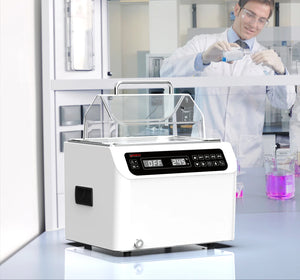
As an example, the Four E's bead mill homogenizer is designed to handle up to 24 2 mL sample tubes per operation, while offering programmable run cycles, easy-to-use touchscreen controls, and memory storage for frequently used methods.
6. Environmental and Soil Research
Environmental samples are often highly heterogeneous.
Soil, sediment, compost, and biofilms contain microorganisms trapped within complex matrices that require thorough mechanical disruption before DNA extraction or metagenomic analysis.
Uniform homogenization improves extraction efficiency and helps researchers obtain more representative analytical results.
7. Veterinary and Clinical Research
Veterinary laboratories routinely analyze tissues collected from livestock, companion animals, wildlife, and laboratory models.
Reliable homogenization supports applications including pathogen detection, vaccine development, disease surveillance, biomarker research, and molecular diagnostics.
8. Drug Discovery and Biomedical Research
Drug discovery depends on reproducible sample preparation across large numbers of experimental samples.
Whether researchers are studying cancer, neuroscience, immunology, or metabolic diseases, consistent homogenization helps reduce variability before downstream molecular analyses.
For valuable or limited specimens, instruments that support programmable grinding cycles with rest periods can also help preserve sensitive biomolecules during processing.
How to Choose the Right Bead Mill Homogenizer
Not every laboratory requires the same type of homogenizer. Choosing the right system depends on both your research applications and daily workload.
Here are several features worth considering:
Throughput: How many samples do you process each day? For laboratories handling high sample volumes, homogenizers with multi-tube processing capabilities help streamline workflows and maintain consistent sample preparation.
Sample Compatibility: Make sure the instrument supports the tube sizes and bead materials required for your tissues, plants, microbes, or environmental samples.
Programmable Methods: Saving frequently used protocols reduces setup time and improves reproducibility between users.
Heat Management: Long grinding cycles can generate heat. Instruments that allow rest periods between cycles help protect heat-sensitive RNA and proteins.
Ease of Use: Touchscreen interfaces, ergonomic tube holders, and quick-loading mechanisms can significantly improve day-to-day laboratory efficiency.
Reliability: A maintenance-free brushless motor and durable construction help minimize downtime, especially in busy research environments.
Conclusion
Every successful molecular experiment starts with high-quality sample preparation. From extracting DNA from animal tissues to lysing microbial cells or preparing environmental samples for metagenomic analysis, a bead mill homogenizer helps researchers achieve faster, more consistent, and more reproducible homogenization than traditional manual methods.
While different laboratories have different throughput requirements, features such as programmable methods, multi-sample processing, intuitive controls, and cycle-based operation can make a meaningful difference in daily workflows. Selecting a homogenizer that matches your sample types and research goals is an investment that can improve both laboratory efficiency and data quality.
Frequently Asked Questions
What is a Bead Mill Homogenizer used for?
A Bead Mill Homogenizer provides consistent mechanical sample disruption for tissues, cells, microorganisms, and complex environmental samples, creating high-quality homogenates for downstream molecular and biochemical applications.
What types of samples can be processed?
Common sample types include animal tissues, plant tissues, bacteria, fungi, yeast, cultured cells, soil, sediment, seeds, and biofilms.
What should I consider when buying a Bead Mill Homogenizer?
Key factors include throughput, tube compatibility, programmable protocols, ease of operation, heat management, motor durability, and compatibility with different bead materials.